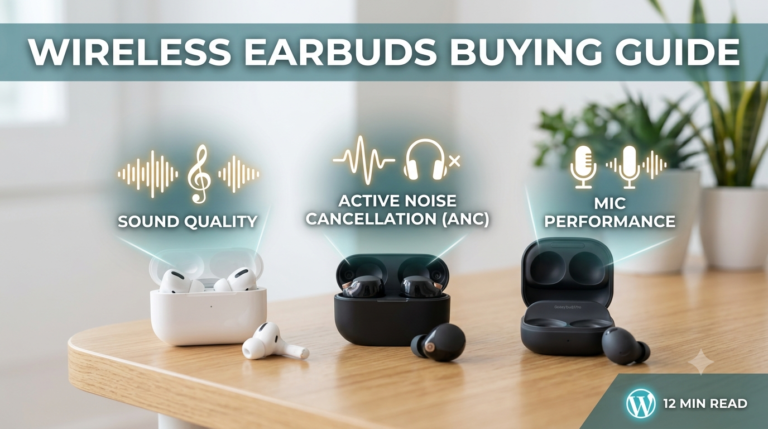
The Ultimate Wireless Earbuds Buying Guide: Sound Quality, ANC, and Mic Performance
 Sparkup Media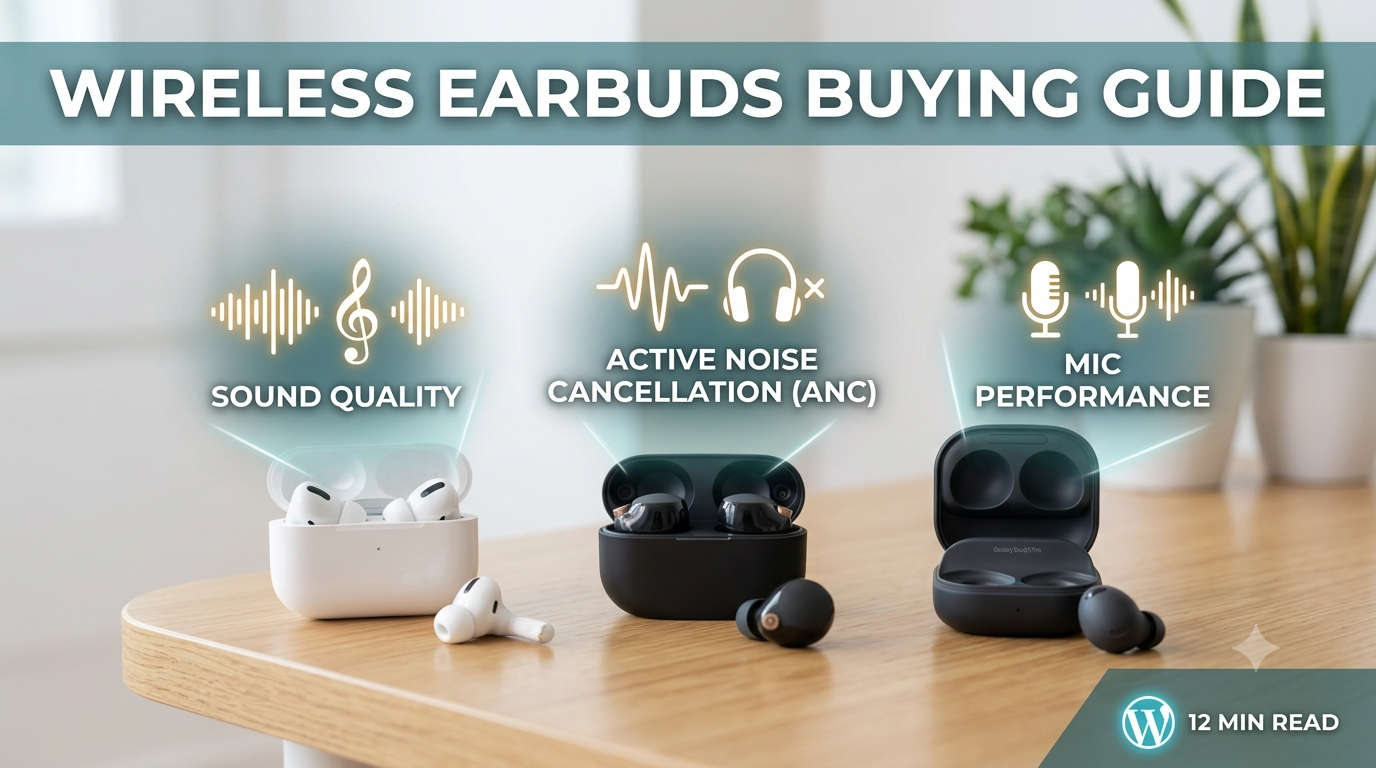
Wireless earbuds have quietly become one of the most personal pieces of tech Americans own. They’re in your ears on the subway, during workouts, on work calls, and on long flights. With dozens of new models launching every year — from Apple and Sony to Bose, Beats, Samsung, and a wave of budget-friendly challengers — picking the right pair can feel overwhelming. This guide breaks the decision down into the three factors that matter most: sound quality, active noise cancellation (ANC), and microphone performance, plus the practical extras (battery, fit, price) that round out a smart purchase.
Start With How You’ll Actually Use Them
Before comparing spec sheets, think about your daily routine. A commuter who rides loud subways has very different needs than a remote worker who’s on video calls all day, or a runner who wants sweat resistance above all else. Keeping your primary use case in mind will save you from overpaying for features you won’t use — or underbuying on the one feature you actually need.
1. Sound Quality: What to Look For
Sound quality is subjective, but a few technical factors reliably shape how earbuds perform.
Driver type and size. Most earbuds use a single dynamic driver, which handles bass and mids well but can struggle with detail at higher volumes. Pricier models increasingly pair a dynamic driver with a balanced armature driver (a “hybrid” or dual-driver setup), which sharpens treble clarity and separates instruments more distinctly. If you listen to a lot of bass-heavy genres like hip-hop or EDM, a single well-tuned dynamic driver is often plenty. If you’re an audiophile who wants detail across a wide frequency range, look for hybrid driver configurations.
Codec support. The Bluetooth codec determines how much audio data actually reaches your ears. Standard SBC is the baseline every device supports, but it compresses audio heavily. AAC works well for Apple devices. For Android users chasing higher fidelity, look for aptX Adaptive, aptX Lossless, or Sony’s LDAC codec, which can transmit significantly more data and produce noticeably crisper high-resolution audio — provided your phone and streaming service both support it.
EQ customization. Companion apps from brands like Sony, Bose, Sennheiser, and Anker Soundcore now offer detailed graphic equalizers or auto-tuned “ear-tip fit tests” that adjust the sound signature to your hearing and ear shape. This matters more than people expect — the same earbuds can sound noticeably different once properly EQ’d.
Ear tip fit. This is the most overlooked factor in perceived sound quality. A poor seal lets bass frequencies leak out, making even excellent earbuds sound thin. Always test multiple ear tip sizes, and consider foam tips (like Comply tips) if silicone doesn’t create a tight seal.
2. Active Noise Cancellation (ANC): How It Works and What Matters
ANC uses microphones to detect ambient noise and generates an inverse sound wave to cancel it out before it reaches your eardrum. It’s especially effective against low, consistent sounds like engine rumble, HVAC hum, or airplane cabin noise, and less effective against sudden, sharp sounds like a dog bark or a door slam.
Hybrid ANC vs. feedforward-only. Cheaper earbuds often use only feedforward microphones (external mics that sample noise before it enters your ear). Better models use hybrid ANC, combining feedforward and feedback microphones (inside the ear canal) for more precise, adaptive cancellation. Flagship 2026 earbuds from Bose, Sony, and Apple lean heavily on hybrid systems, and some now advertise noise reduction figures in the 45–55 dB range, along with adaptive modes that automatically adjust cancellation strength based on your environment.
Transparency mode. Just as important as ANC itself is a good transparency (or “ambient sound”) mode, which lets outside noise in intentionally — useful for hearing announcements, having a conversation, or staying aware while walking near traffic. The best implementations sound natural rather than tinny or artificial.
Passive isolation still matters. Before you even turn ANC on, a snug physical seal from the right ear tip blocks a meaningful amount of noise on its own. ANC is a supplement to a good fit, not a replacement for one.
Who needs strong ANC most: frequent flyers, commuters on loud trains or buses, and people working in open offices. If you mostly listen at home or on quiet walks, you may not need top-tier ANC and can save money on a mid-range pair instead.
3. Mic Performance: Often Overlooked, Increasingly Important
With hybrid work now standard for many Americans, call quality has become just as important as music playback for a lot of buyers.
Beamforming microphone arrays. Better earbuds use multiple mics (often four to six per bud) combined with beamforming and AI-based noise suppression to isolate your voice from background noise like wind, traffic, or a barking dog. This is one of the fastest-improving areas in earbuds technology, with several current models specifically marketing AI-enhanced call clarity.
Wind noise reduction. If you regularly take calls outdoors or while walking, check reviews specifically for wind performance — this is a common weak point even on otherwise excellent earbuds.
Bone conduction and voice pickup sensors. Some premium models add a bone-conduction or accelerometer sensor that detects vibrations from your jaw and skull as you speak, helping isolate your voice even in loud environments. This tends to be the most reliable technology for call clarity in genuinely noisy places like city streets or gyms.
How to test before buying: Read or watch real call-quality comparisons rather than relying on marketing claims — mic performance varies more between models than almost any other spec, and it’s difficult to judge from a spec sheet alone.
4. Battery Life and Charging
Most 2026-era ANC earbuds deliver roughly 6–9 hours of playback per charge with ANC on, and 24+ hours total with the charging case. If you turn ANC off, expect a meaningful bump in per-charge listening time. Look for:
- Fast charging: a 5–10 minute charge that yields 1–2 hours of playback is now common and genuinely useful for forgetful mornings.
- Wireless charging cases: convenient if you already have a charging pad, though not essential.
- USB-C: standard on virtually every current model; if you see a Lightning-only case, it’s an older product.
5. Fit, Comfort, and Durability
- IP rating: Look for at least IPX4 for light sweat/rain resistance; IPX7 or higher if you plan to run, work out heavily, or get caught in downpours.
- Multiple ear tip sizes: Three sizes is standard; four or more gives better odds of a good seal.
- Weight and shape: Stemless designs sit more compactly in the ear; stemmed designs (like AirPods) often house larger batteries and better mic placement.
- Multipoint Bluetooth: Lets you pair with two devices simultaneously (say, your laptop and phone) and switch between them without re-pairing — a genuine convenience for hybrid workers.
Picking by Budget
Under $100: Focus on fit and basic ANC rather than premium codecs. Several budget brands now pack in surprisingly capable hybrid drivers and respectable ANC at this price, though call quality and app polish tend to be the first things cut.
$100–$200: This is the sweet spot for most buyers — solid ANC, good app-based EQ, multipoint pairing, and dependable mic performance are all achievable here.
$200+: Flagship territory from Apple, Sony, and Bose, where you’re paying for the best driver engineering, the most refined adaptive ANC, and the most natural-sounding transparency modes. Worth it if you’re a frequent traveler or an audio enthusiast; often overkill for casual, at-home listening.
Ecosystem Considerations
If you’re deep in the Apple ecosystem, earbuds built for iOS (like AirPods) offer smoother pairing, Find My integration, and automatic device switching that third-party earbuds can’t fully replicate. Android users have more freedom to shop across brands, but should double-check codec compatibility (LDAC and aptX support vary by phone) to get the most out of higher-end audio hardware.
Quick Checklist Before You Buy
- Does it support the Bluetooth codec your phone and streaming service actually use?
- Does it offer hybrid ANC and a natural-sounding transparency mode?
- Have reviewers specifically praised (or criticized) its call/mic quality?
- What’s the real-world battery life with ANC on?
- What IP rating does it carry, and does that match your lifestyle?
- Does the return window let you test the fit for a week before committing?
The Bottom Line
There’s no single “best” pair of wireless earbuds — only the best pair for how you actually live and listen. If call clarity is your top priority because you’re on Zoom all day, weight your decision toward mic array quality and reviews of real-world call tests. If you’re a frequent flyer, prioritize hybrid ANC and comfort for long wear. If you’re chasing the best possible sound, look at driver configuration and codec support first. Match the spec sheet to your habits, test the fit in person or within a return window, and you’ll end up with earbuds you’re happy to wear every day — not just the ones with the flashiest marketing.
About the Author