 Sparkup Media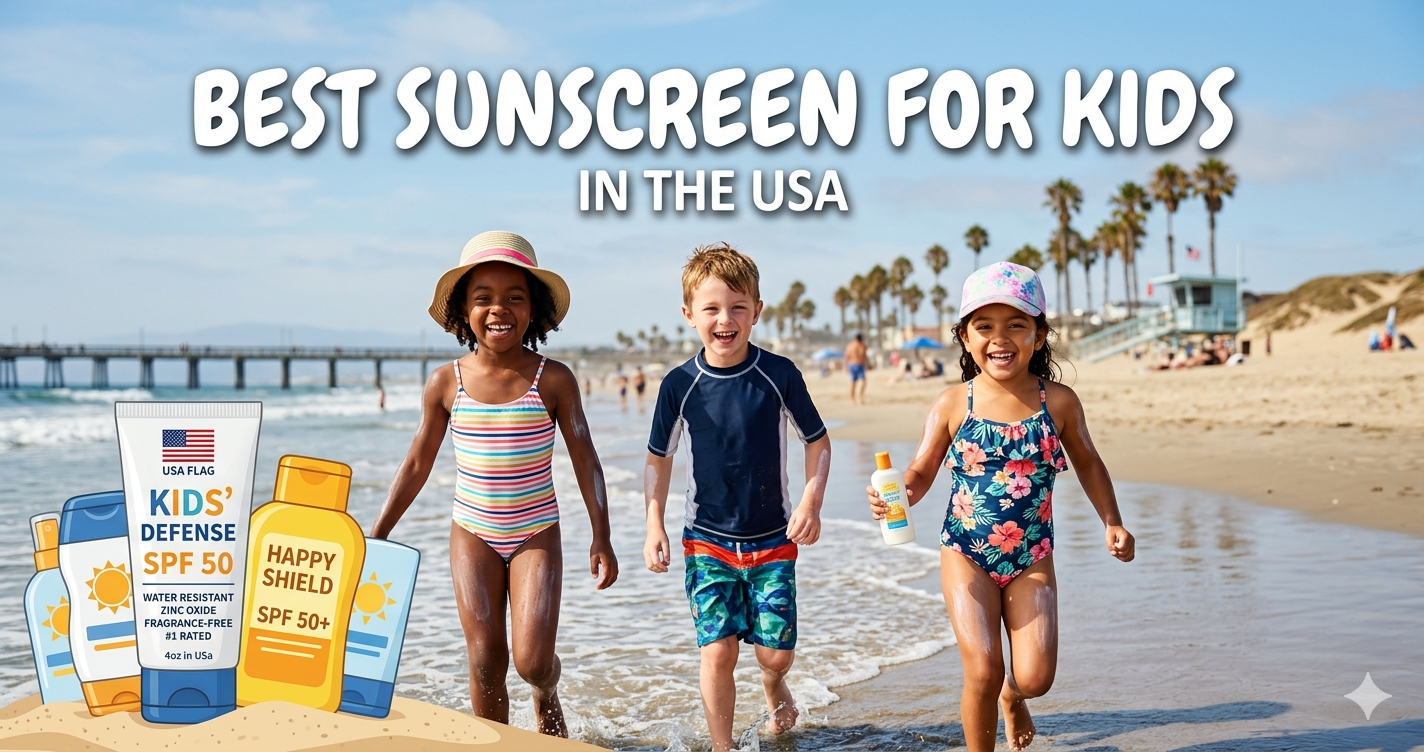
Sunscreen shopping for kids looks simple until you’re standing in the aisle facing fifty bottles, half of them claiming to be “the best.” Here’s what dermatologists and independent lab testing actually say matters — and a few well-reviewed options to start with.
Why It Matters More for Kids
Skin cancer risk is cumulative, and a significant share of a person’s lifetime sun exposure happens before age 18. Children’s skin is also thinner and more sensitive than adult skin, which makes sunburns more likely and more damaging. The American Academy of Dermatology recommends broad-spectrum SPF 30 or higher for all children over 6 months, with SPF 50 offering a stronger margin of protection for full days outdoors, at the pool, or at the beach.
For babies under 6 months, the American Academy of Pediatrics recommends avoiding sunscreen altogether — rely on shade, protective clothing, and wide-brimmed hats instead. When sun exposure can’t be avoided, a small amount of mineral sunscreen on exposed areas is considered acceptable by most pediatric dermatologists.
What to Actually Look For
- Broad-spectrum protection. This means the sunscreen blocks both UVA rays (aging, deeper skin damage) and UVB rays (sunburn, a major skin cancer driver). Skip anything that doesn’t say “broad spectrum” on the label.
- SPF 30-50. Higher than SPF 50 doesn’t meaningfully add protection — consistent application and reapplication matter far more than chasing a higher number.
- Mineral (zinc oxide / titanium dioxide) formulas are generally preferred by pediatric dermatologists for kids, since these sit on top of the skin rather than absorbing into it, and tend to cause fewer skin reactions — especially useful for sensitive skin or eczema-prone kids.
- Water resistance (40 or 80 minutes) if your child will be swimming or sweating — though even “water-resistant” sunscreen needs reapplying after time in water or heavy activity.
- Fragrance-free formulas reduce the chance of irritation on sensitive young skin.
Lotion vs. Spray vs. Stick
Dermatologists and consumer testing organizations generally recommend lotion over spray for kids. Sprays are easy to under-apply, kids can inhale the mist, and wind can blow much of the product away before it reaches the skin. If you do use a spray, spray it into your hands first and rub it on, rather than spraying directly onto your child’s face.
Sticks are a good option for faces, ears, and reapplication on the go, since they’re less likely to run into eyes and easier for slightly older kids to apply themselves.
Don’t Assume Every “Kids” Sunscreen Performs the Same
This is worth knowing: independent lab testing by Consumer Reports has found real variation in performance among products specifically marketed for kids. Their testing found some kids’ sunscreens, including certain Black Girl Sunscreen, Coppertone, and Soleil Toujours products, delivered poor UVA protection and only fair SPF protection despite their labeling. The lesson isn’t to avoid any particular brand outright, but to not assume “made for kids” automatically means top-tier protection — checking recent independent test results (Consumer Reports publishes updated rankings) is worth the extra few minutes before stocking up for the summer.
Well-Reviewed Options to Start With
These brands appear consistently across dermatologist recommendations and independent reviews, across different price points and formulas:
- Blue Lizard Kids Mineral Sunscreen — A favorite among dermatologists, fragrance- and paraben-free, with a smart cap that changes color in UV light to help teach kids about sun exposure.
- Thinkbaby SPF 50+ — All-mineral, reef-safe, frequently recommended for babies and toddlers.
- Neutrogena Wet Skin Kids or Pure & Free Baby lines — Widely available, broad-spectrum, and well-reviewed for sensitive skin.
- Aveeno Kids/Baby Continuous Protection — Formulated with sensitive skin in mind, broad-spectrum, and easy to find at most pharmacies.
- Babyganics SPF 50 — A common choice for tear-free, mineral-based protection for younger kids.
As with any product, check the specific formula and SPF on the bottle you’re buying — brands sometimes carry multiple kids’ formulas with different ingredients and ratings.
A Few Practical Tips
- Apply 15-30 minutes before sun exposure so the sunscreen has time to bind to skin.
- Reapply every two hours, and immediately after swimming, sweating, or towel-drying — no sunscreen lasts all day on its own.
- Use enough. Most people, including parents applying to kids, use far less than the recommended amount. A good rule of thumb is generously covering all exposed skin, not just a light swipe.
- Patch test new products on a small area of skin first, especially for kids with eczema or known sensitivities.
- Sunscreen isn’t a substitute for shade and clothing. UPF swimwear, hats, and avoiding peak midday sun (10am-4pm) all reduce how much sunscreen has to do the work.
The Bottom Line
The best sunscreen for your kids is a broad-spectrum, SPF 30-50 mineral formula that you’ll actually reapply consistently — fragrance-free and in lotion or stick form for the most reliable application. Brand loyalty matters less than checking current, independent test results, since even well-marketed “kids'” products have occasionally underperformed their labels in lab testing.
This article is for informational purposes and isn’t a substitute for personalized advice from your child’s pediatrician or a board-certified dermatologist.
About the Author