
 Sparkup Media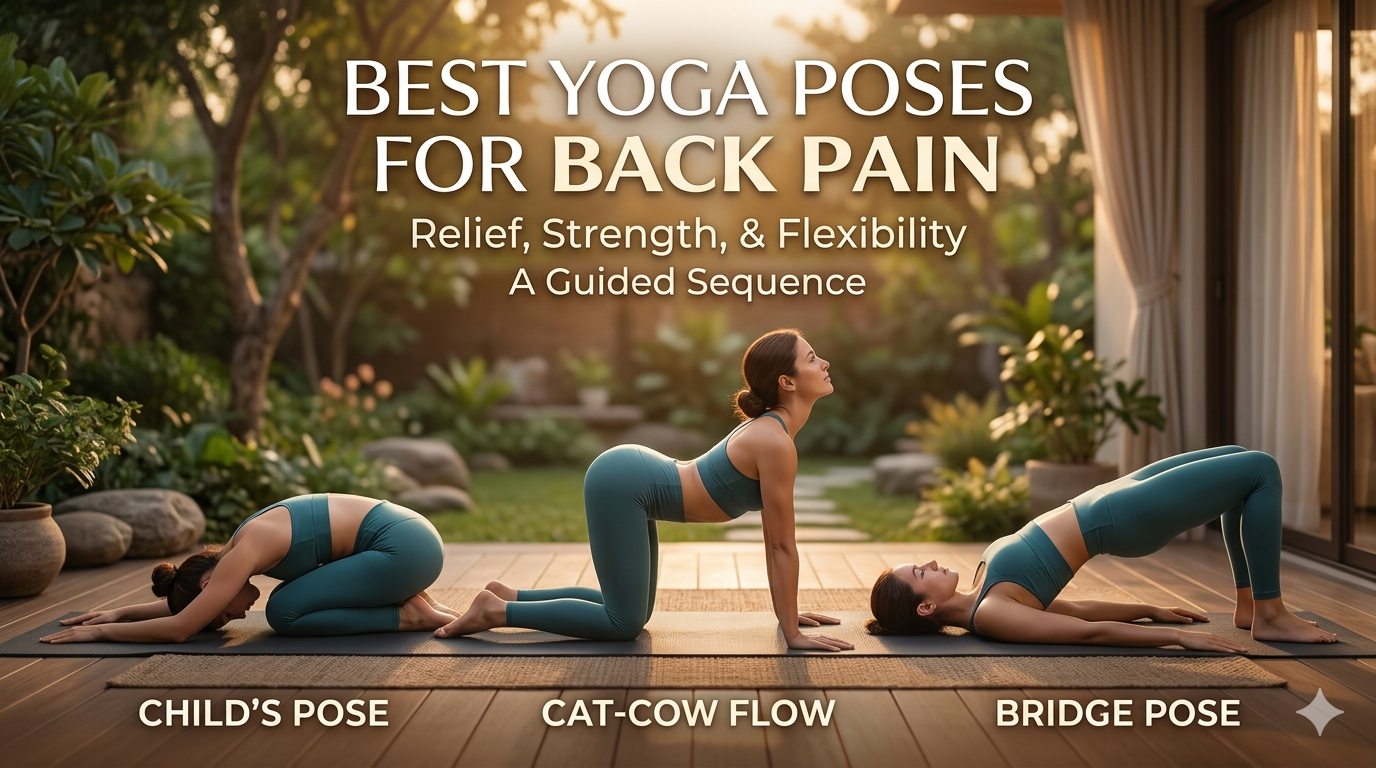
Back pain is one of the most common reasons people turn to yoga — and for good reason. Many forms of back pain, especially the dull, stiffness-related kind that comes from sitting too long or poor posture, respond well to gentle stretching, spinal mobility work, and core strengthening. Below are some of the most effective and widely recommended poses, along with how to do them safely.
A Quick Note Before You Start
Yoga can be excellent for mild-to-moderate, non-specific back pain (the kind caused by tight muscles, poor posture, or stress). It is not a substitute for medical care if you have:
- Pain that radiates down a leg, numbness, or tingling
- Pain following an injury or fall
- Pain accompanied by fever, unexplained weight loss, or loss of bladder/bowel control
- Severe pain that doesn’t ease with rest
In these cases, see a doctor or physical therapist before starting a yoga practice. For everyone else, move slowly, breathe deeply, and stop immediately if a pose causes sharp or shooting pain — gentle stretching should never hurt.
1. Cat-Cow Pose (Marjaryasana-Bitilasana)
Why it helps: Gently mobilizes the entire spine and warms up the back before deeper stretches.
How to do it: Start on hands and knees, wrists under shoulders, knees under hips. Inhale, drop your belly, lift your chest and tailbone (Cow). Exhale, round your spine toward the ceiling, tucking your chin and tailbone (Cat). Move slowly between the two for 8–10 breaths.
2. Child’s Pose (Balasana)
Why it helps: A gentle, passive stretch for the lower back, hips, and spine — also a good resting pose between more active stretches.
How to do it: Kneel with big toes touching, knees apart. Sit back onto your heels and fold forward, extending your arms in front of you or resting them alongside your body. Let your forehead rest on the mat and breathe deeply for 30–60 seconds.
3. Downward-Facing Dog (Adho Mukha Svanasana)
Why it helps: Lengthens the spine and stretches the hamstrings, which can relieve tension that pulls on the lower back.
How to do it: From hands and knees, tuck your toes and lift your hips up and back, forming an inverted V. Keep a slight bend in the knees if your hamstrings are tight — the priority is a long spine, not straight legs. Hold for 5–8 breaths.
4. Sphinx Pose
Why it helps: A gentle backbend that strengthens the lower back and counters the rounded posture of sitting all day.
How to do it: Lie on your stomach, forearms on the mat, elbows under shoulders. Press your forearms down and lift your chest, keeping your lower back relaxed rather than crunched. Hold for 30–60 seconds.
5. Cobra Pose (Bhujangasana)
Why it helps: A slightly deeper backbend than Sphinx that builds spinal strength once your back is warmed up.
How to do it: Lie face down, hands under your shoulders. Press into your hands and lift your chest just a few inches off the floor, keeping elbows slightly bent and shoulders away from your ears. Avoid pushing into pain — this should feel like a stretch, not a strain.
6. Reclined Spinal Twist (Supta Matsyendrasana)
Why it helps: Releases tension along the spine and in the glutes/lower back, which often refer pain into the lower back.
How to do it: Lie on your back, hug one knee into your chest, then guide it across your body toward the floor while keeping both shoulders grounded. Turn your head the opposite direction. Hold 30–60 seconds per side.
7. Knees-to-Chest Pose (Apanasana)
Why it helps: A gentle decompression stretch for the lower back.
How to do it: Lie on your back and draw both knees toward your chest, wrapping your arms around your shins. Rock gently side to side if it feels good. Hold for 30–60 seconds.
8. Bridge Pose (Setu Bandhasana)
Why it helps: Strengthens the glutes and lower back muscles that support the spine — a strong core and glutes take pressure off the lower back over time.
How to do it: Lie on your back, knees bent, feet flat on the floor hip-width apart. Press through your feet to lift your hips, keeping your core engaged. Hold for a few breaths, then lower slowly. Repeat 5–10 times.
9. Thread the Needle
Why it helps: Targets the piriformis and outer hip, which can contribute to lower back and sciatic-type pain when tight.
How to do it: Lie on your back, knees bent. Cross one ankle over the opposite knee, then thread your hands through to clasp behind the standing leg’s thigh, gently pulling it toward your chest. Hold 30–60 seconds per side.
10. Standing Forward Fold (Uttanasana)
Why it helps: Stretches the hamstrings and lower back; can be done with bent knees to keep the stretch comfortable.
How to do it: Stand with feet hip-width apart, hinge at the hips, and let your upper body hang forward, knees softly bent. Let your head and neck relax. Hold for 30–60 seconds, then roll up slowly, one vertebra at a time.
Putting It Together
A simple 10–15 minute sequence for everyday back tension:
- Cat-Cow — 8–10 rounds
- Child’s Pose — 1 minute
- Downward Dog — 5 breaths
- Sphinx or Cobra — 1 minute
- Bridge Pose — 8 reps
- Knees-to-Chest — 1 minute
- Reclined Twist — 1 minute per side
- Child’s Pose — 1 minute (to close)
Practicing this a few times a week, alongside regular movement throughout the day, tends to be more effective for back pain than any single pose done occasionally. If pain persists beyond a couple of weeks or worsens, check in with a doctor or physical therapist rather than pushing through it.
About the Author