 Admin
Admin 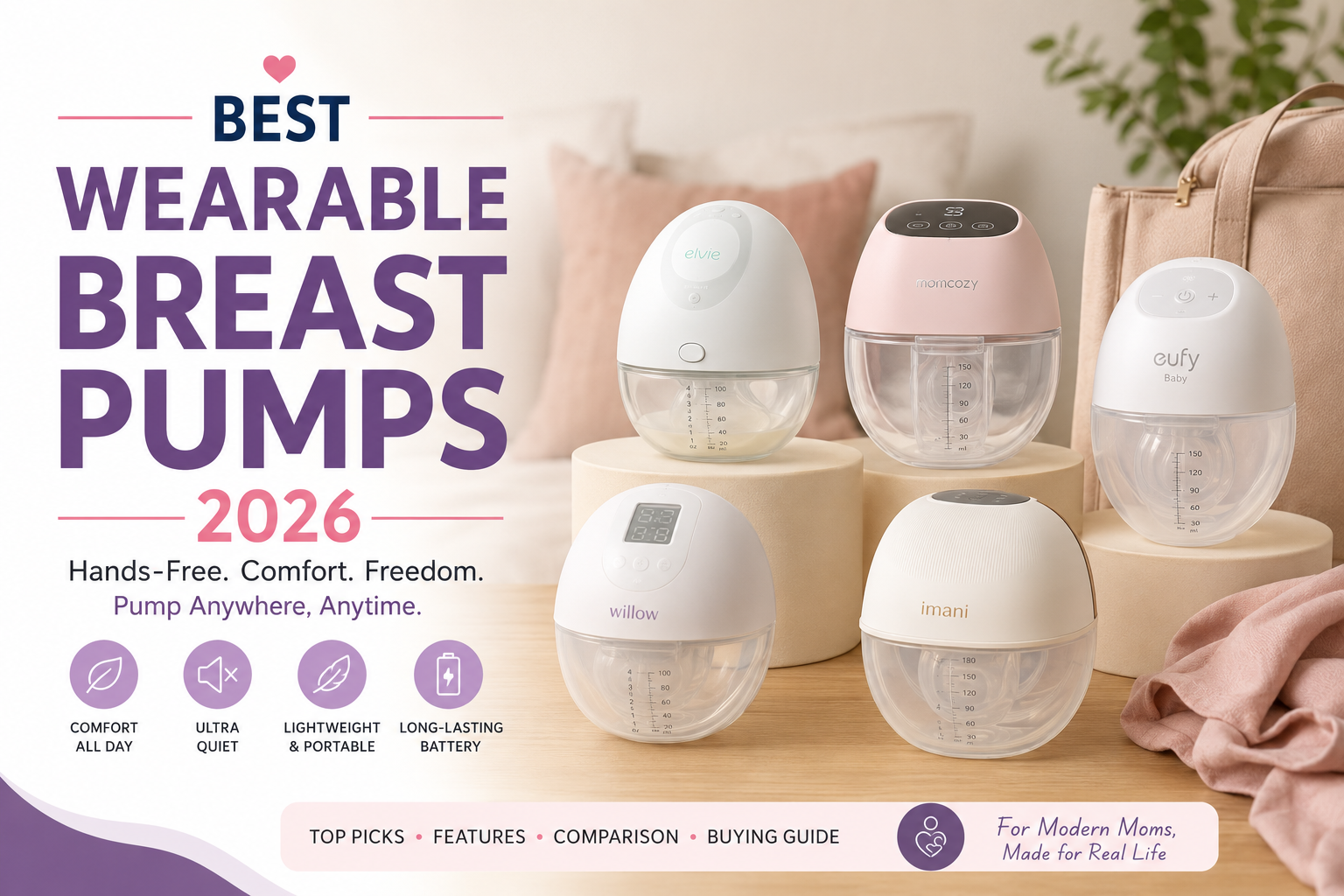
Whether you’re heading back to work, running errands, or just trying to reclaim a little freedom, a wearable breast pump can be a game-changer. Unlike traditional pumps that tether you to a wall outlet, wearable (or “in-bra”) pumps are battery-powered, wireless, and hands-free — fitting discreetly inside your nursing bra so you can pump during a meeting, on a commute, or while chasing your toddler around the house.
In 2026, these pumps are better than ever. Hospital-grade suction, app connectivity, multi-day battery life, and even built-in warming technology have made their way into slim, bra-friendly designs. But not every pump lives up to the marketing hype — so we’ve done the research, reviewing real-world feedback and expert guidance to bring you the definitive list of the best wearable breast pumps available in the USA right now.
What to Look for in a Wearable Breast Pump
Before diving into the picks, here are the key factors that separate a great wearable pump from a frustrating one:
Suction strength (mmHg): Hospital-grade starts at around 300 mmHg. Anything below that may struggle for moms with lower milk supply or those exclusively pumping.
Noise level (dB): For pumping at work or in shared spaces, look for models under 50 dB. The quietest models on the market hover around 42–46 dB.
Battery life: Aim for a pump that can get you through at least 3–4 sessions on a single charge. Some models now ship with wireless charging cases for multi-day power.
Fit and comfort: Flanges (breast shields) that don’t fit properly can reduce output and cause discomfort. Look for pumps that include multiple flange sizes or inserts.
Ease of cleaning: Fewer parts = faster cleanup. After multiple sessions a day, this matters more than most first-time buyers expect.
App connectivity: The best pumps offer smartphone app control for adjusting suction levels, tracking sessions, and monitoring output over time.
Insurance coverage: Under the ACA, most U.S. insurance plans are required to cover a breast pump — but not all plans extend that coverage to wearable models. Many wearables are available through insurance, though premium models may require an upgrade fee.
A note from lactation experts: Most IBCLCs (International Board Certified Lactation Consultants) recommend using a wearable pump as a secondary or on-the-go option rather than your sole pump — particularly if you’re exclusively pumping or working to build supply. Traditional electric pumps generally empty the breast more thoroughly, which is important for long-term supply.
The Best Wearable Breast Pumps of 2026
1. Eufy Wearable Breast Pump S1 Pro — Best Overall
The Eufy S1 Pro has earned the top spot in nearly every 2026 roundup — and for good reason. It combines hospital-grade performance with smart features that make all-day pumping genuinely convenient.
Standout features:
- Up to 300 mmHg hospital-grade suction
- HeatFlow™ warming technology (7 levels, 95–105°F) — gentle warmth that supports letdown and improves milk flow
- Under 46 dB noise — quiet enough for video calls and shared offices
- OptiRhythm™ pumping patterns (4 customizable modes) controlled via the Eufy Baby app
- Multi-day battery life with a wireless charging case
- Fully in-bra, wireless design — no external tubing or dangling parts
The HeatFlow warming feature is a genuine differentiator. It helps simulate the warmth of a baby’s latch, which many moms find speeds up letdown and makes sessions more efficient. The app control is intuitive, and the pump is quiet enough to use in professional settings without drawing attention.
Best for: Working moms, frequent travelers, and anyone who wants the most feature-complete wearable on the market.
Insurance note: ACA-eligible; some plans may require a small upgrade fee.
2. Elvie Pump — Best for Discretion
The Elvie Pump has long been the benchmark for slim, discreet wearable pumping — and it remains one of the best options in 2026 for moms who prioritize a near-invisible profile under clothing.
Standout features:
- Ultra-slim, lightweight design — the thinnest wearable pump available, weighing just 225g
- SmartRhythms technology with infrared sensors that automatically detect letdown and switch from stimulation to expression mode
- Approximately ~55 dB noise level — whisper-quiet at all settings
- App-controlled with 2 modes and 7–14 intensity levels
- Battery lasts 5–6 pumping sessions per charge
- 5 oz milk capacity per cup
The Elvie’s engineering is genuinely impressive. Its suction curve mimics natural letdown patterns more accurately than most competitors, and the lightweight build makes it comfortable for extended all-day wear under workwear. The tradeoff is price — at around $280–$549 (single or double), it’s one of the more expensive options on the list.
Best for: Moms who need maximum discretion in professional settings, or who pump on video calls and want the quietest possible experience.
Insurance note: Coverage varies by plan; worth checking with your provider.
3. Momcozy M9 — Best Value / Best Budget Pick
Momcozy has disrupted the wearable pump market by delivering strong performance at a dramatically lower price point. The M9 (and its sibling, the S12 Pro) have become favorites among moms who want solid hands-free pumping without a $300+ investment.
Standout features:
- Up to 300 mmHg suction — genuinely hospital-grade
- 15 suction levels with app control (Milk Boost / Milk Relief / MyFlow modes)
- Under 42 dB noise
- 150 ml (5 oz) capacity per cup
- Up to 150 minutes (4–5 sessions) per charge
- Lightweight at 10.7 oz (302g)
At around $50–$165 depending on the model, Momcozy offers roughly 80% of the Elvie experience at a fraction of the cost. The S12 Pro in particular has been praised for its surprising suction strength and larger cup capacity (about 6 oz per cup vs. Elvie’s 5 oz). The tradeoff is build quality — Momcozy pumps are less precisely engineered than premium models and may feel slightly bulkier under clothing.
Best for: Budget-conscious moms, first-time wearable pump buyers, and anyone who wants a reliable backup pump for their bag or car.
Insurance note: Momcozy is commonly covered under U.S. insurance plans. One of the more accessible options for no-cost insurance fulfillment.
4. Willow Go — Best for Total Freedom of Movement
The Willow Go is built around one promise: complete freedom of movement, including pumping in any position — including lying down — without spilling.
Standout features:
- Up to 280 mmHg hospital-grade suction
- Spill-proof, leak-proof technology — works at any angle
- 5 or 7 oz reusable containers (highest capacity of any wearable pump)
- 6 stimulation levels + 9 expression levels (15 total)
- Battery lasts up to 5 sessions per charge
- App connectivity via the Willow app
- Fully wireless, in-bra design with no external tubing
The Willow Go’s vertical design sets it apart visually from competitors, and its leak-proof performance in all positions is a genuine differentiator for moms who are highly active or need to pump while moving around. The 7 oz container option is also the most generous capacity available in the wearable category — ideal for high-output pumpers.
Best for: Active moms, moms who need to pump in a variety of positions, and high-output pumpers who hate mid-session interruptions.
Insurance note: Coverage often requires an upgrade fee above a base plan allowance.
5. Hygeia Esprit — Best Hospital-Grade Performance in a Wearable
Hygeia has been a trusted name in clinical-grade breast pumps for over a decade, and the Esprit brings that hospital-grade pedigree into a wearable form factor.
Standout features:
- True hospital-grade suction in a lightweight wearable design
- ACA insurance-eligible — most moms pay $0 out-of-pocket
- Free Hygeia Baby app for session tracking
- Access to Nest Collaborative IBCLC lactation support
- 4.9/5 stars across 2,887+ verified reviews
- Adjustable suction levels and let-down mode
For moms who pump multiple times a day and want clinical reliability in a wearable format, the Esprit is a strong choice. The IBCLC support partnership adds real value for new moms navigating supply challenges.
Best for: Moms who pump seriously multiple sessions a day, exclusive pumpers, and anyone who wants clinical-grade support + insurance coverage.
6. Zomee Fit — Best Insurance-Covered Budget Option
The Zomee Fit punches above its weight class and is frequently cited as one of the most accessible insurance-covered wearable pumps in 2026.
Standout features:
- Lightweight design at 263g
- Solid performance for everyday on-the-go pumping
- Frequently fully covered by insurance with no upgrade fee
- Easy to clean with straightforward assembly
- Dishwasher-safe components
The Zomee Fit is the pick for moms who want a no-fuss, low-cost wearable option that’s likely to be fully covered by their insurance plan without any extra out-of-pocket expense. It won’t match the premium features of the Eufy S1 Pro or Elvie, but for occasional and secondary use, it delivers reliable performance.
Best for: Moms who want a fully insurance-covered wearable with no upgrade fee, or a simple backup pump.
Quick Comparison Chart
| Pump | Best For | Suction (mmHg) | Noise (dB) | Approx. Price | Insurance |
|---|---|---|---|---|---|
| Eufy S1 Pro | Overall / Working moms | 300 | <46 | ~$199–$249 | Yes (may need upgrade) |
| Elvie Pump | Discretion / Quietest | ~300 | ~55 | $280–$549 | Varies |
| Momcozy M9/S12 Pro | Budget / Value | 300 | <42–60 | $50–$165 | Yes |
| Willow Go | Total freedom / High output | 280 | Quiet | ~$165–$200 | Yes (may need upgrade) |
| Hygeia Esprit | Clinical performance | Hospital-grade | Moderate | ~$0 with insurance | Yes, often $0 |
| Zomee Fit | Free through insurance | Solid | Quiet | ~$0 with insurance | Yes, often fully covered |
Frequently Asked Questions
Are wearable breast pumps as effective as traditional electric pumps? They’re getting close — but the gap hasn’t fully closed. High-end wearables like the Eufy S1 Pro and Momcozy M9 now reach hospital-grade suction levels, but lactation professionals generally recommend using a wearable as a secondary or on-the-go option, with a traditional pump for routine milk removal to maintain supply long-term.
Can I get a wearable breast pump through insurance? Yes, in many cases. The ACA requires most insurance plans to cover a breast pump, and many wearable pumps are included. Models like the Zomee Fit and Hygeia Esprit are often fully covered, while premium models like the Eufy S1 Pro may require a small upgrade fee. Always check with your insurer or a DME supplier like 1 Natural Way before purchasing.
What flange (breast shield) size do I need? Measure your nipple diameter and add 2–4mm to find your starting size. Most pumps include 21mm, 24mm, and sometimes 27mm options. If you’re unsure, a lactation consultant can help you get the right fit — improper flange sizing is one of the most common causes of reduced output and discomfort.
Can I pump at work without anyone noticing? With the right pump, yes. Models like the Eufy S1 Pro (under 46 dB) and Elvie Pump are quiet enough for use in office settings. The in-bra design means no external tubing or motor unit, and under most clothing, the profile is minimal.
Should I buy a single or double pump? A double pump (one per breast) saves significant time. Single pumps are available for some models and can cut costs, but pumping one breast at a time roughly doubles your pumping time each session.
The Bottom Line
The best wearable breast pump in 2026 depends on what matters most to you:
- Want the best overall? → Eufy S1 Pro
- Need maximum discretion? → Elvie Pump
- Working with a tight budget? → Momcozy M9 or S12 Pro
- Active lifestyle and high output? → Willow Go
- Want $0 out-of-pocket through insurance? → Hygeia Esprit or Zomee Fit
Whatever you choose, a good wearable pump can meaningfully improve your daily pumping experience — giving you back time, flexibility, and a little peace of mind during one of the most demanding seasons of life.
Always consult with a Board Certified Lactation Consultant (IBCLC) if you have concerns about milk supply, pump fit, or establishing a pumping routine. Insurance coverage details change frequently — verify your eligibility directly with your insurer or a certified DME provider.