The Best Protein Powder for Muscle Gain: What the Research Actually Says
 Sparkup Media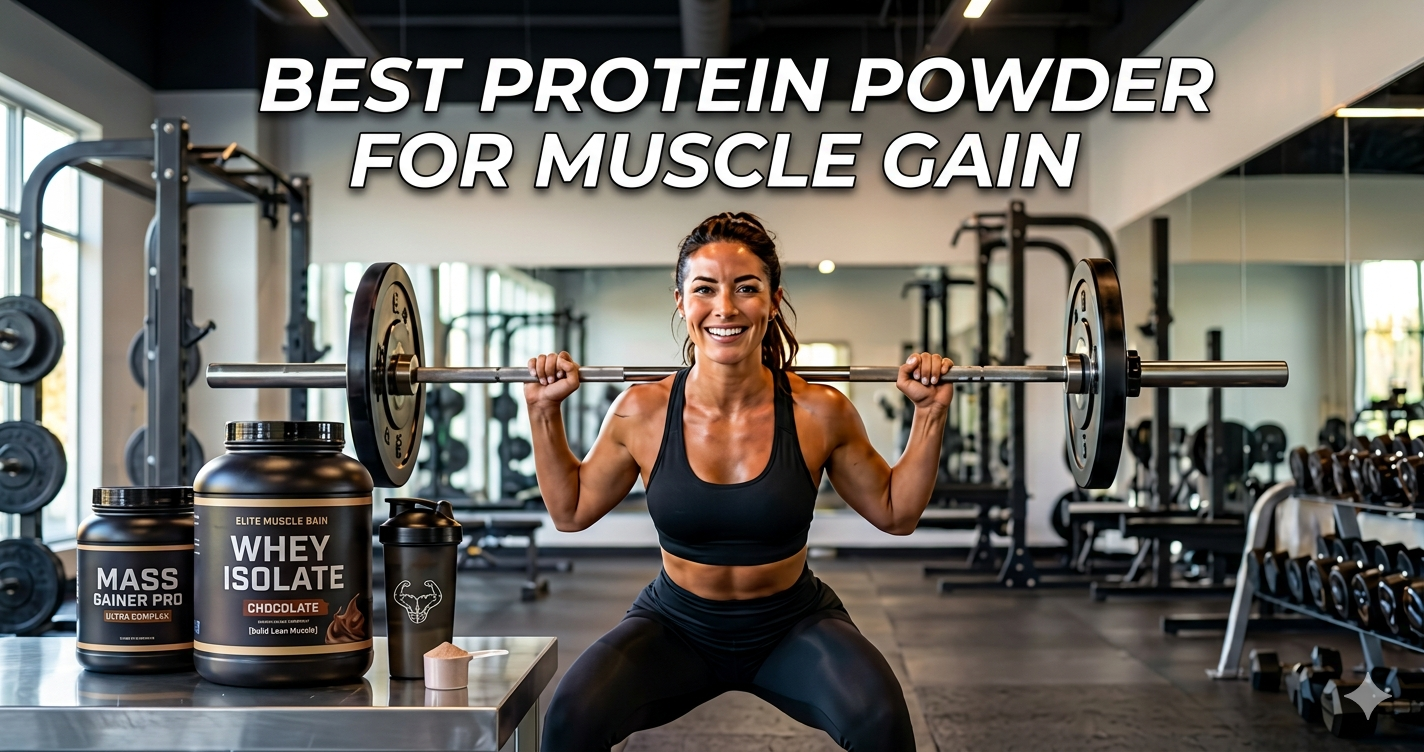
Walk into any supplement store and you’ll find an entire wall of protein powders, each one claiming to be “optimal for muscle growth.” The truth is simpler than the marketing suggests: muscle gain depends far more on total daily protein and training than on which specific powder you buy. Here’s what actually matters when you’re choosing one.
What Builds Muscle — and Where Powder Fits In
Muscle growth happens when you combine resistance training with enough protein to repair and build new muscle tissue. Protein powder isn’t magic — it’s a convenient, concentrated way to hit your daily protein target, especially when whole food alone is hard to fit into a busy schedule.
Research generally supports a daily protein intake of 1.6 to 2.2 grams per kilogram of body weight (roughly 0.7 to 1 gram per pound) for people actively trying to build muscle. Once you’re hitting that number consistently, the type of protein powder you use matters far less than people assume.
The Main Types of Protein Powder
Whey protein concentrate. The most common and budget-friendly option, typically 70-80% protein by weight, with small amounts of carbs and fat retained from the milk it’s derived from. It works just as well as more “refined” forms for muscle building when your total daily protein is equal.
Whey protein isolate. Filtered further to remove more fat, lactose, and carbs, pushing protein content above 90% per scoop. It’s a good choice if you’re lactose-sensitive, watching carb intake, or want the most protein per calorie — but it isn’t inherently more “anabolic” than concentrate.
Whey protein hydrolysate. Pre-broken-down for faster absorption. The speed difference is real but has minimal practical impact on muscle growth outcomes over the course of a day.
Casein. A slow-digesting milk protein, often used before bed since it releases amino acids gradually over several hours. Useful for overnight recovery, but not essential — total daily intake still matters most.
Plant-based blends (pea, rice, soy, hemp). A well-formulated plant blend can build muscle just as effectively as whey, but only if the amino acid profile is complete. Individual plant proteins like pea or rice are often missing certain essential amino acids on their own, so look for blends that combine multiple sources (e.g., pea + rice) to round out the profile, particularly leucine content, which plays an outsized role in triggering muscle protein synthesis.
What Actually Distinguishes a Good Protein Powder
Since the underlying protein type matters less than people think, the differences that do matter come down to a few practical factors:
- Protein per serving. Look at grams of actual protein, not just scoop size. Quality whey products typically deliver 24-28g of protein per serving.
- Third-party testing. This is the single most important quality marker. Because supplements aren’t pre-approved by the FDA the way medications are, a “lab tested” claim from a brand’s own internal lab means very little. Look for certifications like NSF Certified for Sport, Informed Choice / Informed Sport, or USP Verified — these involve independent batch-testing for label accuracy, heavy metals, and banned substances.
- Minimal unnecessary additives. Added fillers, artificial sweetener overload, or proprietary “muscle blends” with underdosed extras don’t move the needle on muscle growth and often just add cost.
- Digestibility and taste. The best protein powder is the one you’ll actually drink consistently. If a product upsets your stomach or tastes bad enough that you skip it, it doesn’t matter how clean the formula is on paper.
- Price per gram of protein. Cost varies enormously between brands offering nearly identical ingredient quality. It’s worth comparing cost-per-serving rather than sticker price.
How to Choose Based on Your Situation
- If you’re lactose-sensitive or want maximum protein per scoop: whey isolate.
- If you want the best value and don’t have digestion issues: whey concentrate.
- If you train in the evening and want overnight recovery support: casein, or a blend that includes it.
- If you’re vegan, vegetarian, or avoiding dairy: a multi-source plant protein blend (pea + rice is a common, effective combination) with a complete amino acid profile.
- If you have a milk allergy (not just lactose intolerance): plant-based or egg-white protein, since whey and casein are both derived from milk.
A Few Honest Caveats
- No protein powder will out-perform poor training or inconsistent eating. It supplements your diet; it doesn’t replace the fundamentals of progressive resistance training and adequate total calories.
- More protein isn’t automatically better. Once you’re hitting your daily target, extra protein from powder doesn’t accelerate muscle growth further — your body can only use so much at a time for muscle repair.
- “Muscle gain” branding is mostly marketing. A product labeled for “muscle gain” and one labeled “lean” or “fitness” are very often nearly the same whey protein with different packaging.
- Mass gainers are a separate category. These add significant carbs and calories on top of protein, intended for people who struggle to eat enough to gain weight — not a requirement for muscle growth itself, and easy to overdo if your goal is lean gain rather than rapid weight gain.
The Bottom Line
For most people focused on muscle gain, the “best” protein powder isn’t a single specific product — it’s whichever third-party-tested whey or complete plant-based protein delivers a solid dose of protein per serving, fits your budget, agrees with your stomach, and tastes good enough that you’ll actually use it every day. Consistency with your overall protein intake and training program will do far more for your results than the brand on the tub.
This article is for informational purposes and isn’t a substitute for personalized medical or nutritional advice.
About the Author